DIVISION OF
ENGINEERING AND CONSTRUCTION MANAGEMENT
Bland (chair), Caldwell, Faust, Holmes, Macfarlan, Norwood, Setian, Terrill
The Division of Engineering and Construction Management comprises the Departments of Construction Management, Engineering, and Renewable Energy. Bachelor's degrees are offered in Construction Management, Engineering, and Renewable Energy. Associate's degrees are offered in Construction Management and Electromechanical Technology. A minor is offered in Construction Management and Renewable Energy.
MISSION OF THE DIVISION
The mission of the Division of Engineering and Construction Management is to provide a university education integrating general studies and disciplinary studies to equip students to excel in their chosen major.
The faculty of the division seeks to educate the student in the methods of carefully and logically understanding problems and of designing solutions for those problems. Education within the division is in the context that "All truth is God's truth"; therefore, a biblical world- and life-view is the basis for problem-solving procedures. "The fear of the Lord is the beginning of knowledge." (Proverbs 1:7). A low student-faculty ratio within the division assures interaction between faculty and students on these and other issues. The curriculum and the co-curriculum prepare the division graduates to function effectively in advanced technical positions or to enter graduate studies.
ACCREDITATION
The Bachelor of Science in Engineering degree with electrical/computer, mechanical, or renewable energy concentration is accredited by the Engineering Accreditation Commission of the Accreditation Board for Engineering and Technology (ABET), 111 Market Place, Suite 1050, Baltimore, MD 21202-4012, phone: (410) 347-7700.
The Bachelor of Science in Construction Management degree is accredited by the American Council for Construction Education (ACCE), phone: (210) 495-6161.
FACILITIES
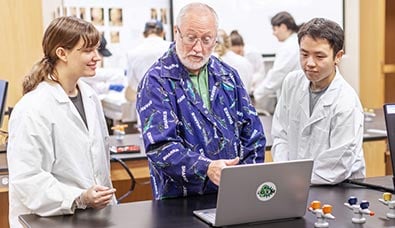
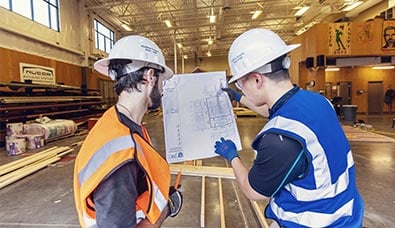
The division facilities are in three buildings, providing 25,000 square feet. Laboratories occupy 10,000 square feet and shops 4,000 square feet. Laboratories support instruction and student design activities in thermal sciences, fluids, mechanical testing, machine design, materials science, instrumentation, control systems, electronics, communications, and opto-electronics. A welding shop, a machine shop, and a modeling shop provide support for student projects. The Construction Management Department has a construction staging area and office that is used for the integrated Senior Capstone course which manages the construction of a building each year. The Renewable Energy majors have exterior sites for study of solar and wind energy experiments.
ADVISORY BOARDS
Advisory boards for both Construction Management and Engineering are made up of distinguished alumni and other professionals. These groups give counsel on curriculum focus, professional issues, and integration of faith and learning.
SCHOLARSHIPS
Scholarships are available to upper-division Construction Management and Engineering students. These are supported by the Fred Olney Endowed Engineering Scholarship, the Engineering Excellence Endowed Scholarship, the Harold C. and Mildred B. Ward Endowed Engineering Scholarship, the Charles Willis Endowed Scholarship, the Robert D. Nabholz Construction Scholarship, the Milton and Leila Levy Endowed Scholarship, the National Association of Women in Construction Scholarship, the American Society of Professional Estimators Endowed Scholarship, the Jeff Scholtens Memorial Endowed Scholarship, the Barnabas (An Encourager) Endowed Scholarship (Acts 4:36), the Engineering Opportunity Endowed Scholarship, and the Dennis Schumacher Engineering Scholarship.
DEPARTMENT OF CONSTRUCTION MANAGEMENT
(SYMBOL: CM)
The vision of the Department of Construction Management is to prepare graduates to influence the built environment through a balanced application of technical expertise, ethics, stewardship, creativity, craftsmanship, work, community, and leadership. The education is provided in a Christian context that promotes spiritual growth and the development of positive character traits such as honesty, reliability, and industriousness, which result in a high level of professionalism.
Construction Management students have access to over sixteen computer workstations in the department. These stations are equipped with software used for estimating, scheduling, 3D architectural design, structural design, and other construction applications. Computer applications are studied in lecture courses and are used in practicum courses on real projects. Practical experience is also given in the use of surveying equipment and applicable power tools. Seniors gain experience in managing an actual construction project on lots owned by JBU in a local housing development.
Graduates from this department are equipped to meet the demands of the construction industry. They are found managing the construction process in both the residential and commercial sector of the industry. This program is also suited for students interested in becoming Christian missionary builders and for students interested in Design-Build. Students may choose between a Business Administration option or the International Construction option.
John Brown University is a member of the Associated Schools of Construction, and is recognized by the Arkansas Chapter of the Associated General Contractors of America, Inc., the Arkansas Chapter of the Associated Builders and Contractors, and the American Institute of Constructors. The program is accredited by the American Council for Construction Education (ACCE), phone: (210) 495-6161.
National Certification Exam
Graduating seniors are required to take the Associate Constructor Exam administered by the Constructor Certification Commission (CCC). The American Institute of Constructors (AIC) is the sponsoring organization and is the professional society for those working in the field of construction management.
Requirements for the Bachelor of Science (B.S.) degree with major in Construction Management
1. University Core Curriculum-37 hours
The Mathematics, Physical Science, and Social Science electives are covered by program requirements.
EGL 4003, Biological Science, and Global Studies are not required.
2. Construction Management Major Field-86 hours
ATG 1163 Accounting for Decision Making
BUS 2113 Financial Spreadsheet Applications
BUS 2153 Financial Mathematics
CHM 1014 Fundamentals of Chemistry
CM 1112 Construction Techniques I
CM 1122 Construction Techniques II
CM 1223 Graphic Communication Skills
CM 1313 Materials of Construction
CM 2213 Construction Methods I
CM 2223 Construction Methods II
CM 2322 Statics and Strength for Technology
CM 2431 Construction Internship A
CM 3213 Construction Safety and Quality
CM 3233 Structural Systems for Building
CM 3603 Mechanical/Electrical Systems for Buildings
CM 3613 Architectural Design I
CM 3623 Architectural Design II
CM 4323 Construction Contracting
CM 4613 Construction Project Planning and Scheduling
CM 4713 Construction Management I
CM 4723 Construction Management II
ECN 2123 Principles of Macroeconomics
PHY 1114 Fundamentals of Physics I
3. One of the following Options-10 hours:
A. Business Administration
BUS 3153 Applied Business Ethics
CM 2441 Construction Internship B
MGT 2173 Principles of Management
B. International Construction
CM 2541 International Construction Internship B
ICS 2113 Intercultural Communication
INT 2183 International Management
INT 3153 International Marketing
Minimum total semester hours . . . . . . . . . . . . . . . . . . . . .133
Possible Four-Year Plan for Bachelor of Science in Construction Management degree
Freshman Year - Fall
CM 1112 Construction Techniques I
CM 1313 Materials of Construction
COR 1002 Gateway Seminar Christian Scholarship
EGL 1013 English I: Composition
15 hours
Freshman Year - Spring
ATG 1163 Accounting for Decision Making
CHM 1014 Fundamentals of Chemistry
CM 1122 Construction Techniques II
CM 1223 Graphic Communication Skills
EGL 1023 English II: Literary Analysis and Research
17 hours
Sophomore Year - Fall
BBL 1023 New Testament Survey0
CM 2213 Construction Methods I
HST 1013 Western Civilization I
PHY 1114 Fundamentals of Physics I
16 hours
Sophomore year - Spring
CM 2223 Construction Methods II
CM 2322 Statics and Strength for Technology
CM 2431 Construction Internship A
HST 1023 Western Civilization II
MGT 2173 Principles of Management (or INT 2183-Fall)
18 hours
Summer
CM 2441 Construction Internship B (or CM 2541)
1 hour
Junior Year - Fall
BUS 2153 Financial Mathematics
CM 3213 Construction Safety and Quality
CM 3613 Architectural Design I
COM 2523 Public Speaking (or ICS 2113-Spring)
18 hours
Junior Year - Spring
BUS 2113 Financial Spreadsheet Applications
CM 3233 Structural Systems for Buildings
CM 3603 Mechanical/Electrical Systems for Buildings
CM 3623 Architectural Design II
ECN 2123 Principles of Macroeconomics
15 hours
Senior Year - Fall
BUS 3153 Applied Business Ethics
CM 4613 Construction Project Scheduling and Cost Control
CM 4713 Construction Management I
18 hours
Senior Year - Spring
BBL 4002 Capstone Seminar in Christian Life
CM 4323 Construction Contracting
CM 4723 Construction Management II
15 hours
Requirements for minor in Construction Management
The student must successfully complete a minimum of 19 hours.
CM 1112 Construction Techniques I
CM 1122 Construction Techniques II
CM 1223 Graphic Communication Skills
CM 1313 Materials of Construction
One of the following:
CM 2213 Construction Methods I
CM 2223 Construction Methods II
One of the following:
CM 3213 Construction Safety and Quality
CM 3603 Mechanical/Electrical Systems for Buildings
CM 3613 Architectural Design I
Requirements for the Associate of Science (A.S.) degree with major in Construction Management
1. University Core Curriculum-26 hours
COR 1002 Gateway Seminar in Christian Scholarship
EGL 1013 English I: Composition
EGL 1023 English II: Literary Analysis and Research
Core Electives
Wellness Activity-1 hour
Natural Science-3 hours
Social Science-3 hours
One of the following:
HST 1013 Western Civilization I
HST 1023 Western Civilization II
2. Courses Specified by this Department-33 hours
ATG 1163 Accounting for Decision Making
BUS 2113 Financial Spreadsheet Applications
CM 1112 Construction Techniques I
CM 1122 Construction Techniques II
CM 1223 Graphic Communication Skills
CM 1313 Materials of Construction
CM 2431 Construction Internship A
CM 2441 Construction Internship B
One of the following:
CM 2213 Construction Methods I
CM 2223 Construction Methods II
Two of the following:
CM 3213 Construction Safety and Quality
CM 3603 Mechanical/Electrical Systems for Buildings
CM 3613 Architectural Design I
3. Electives as necessary to complete minimum total hours
Minimum total semester hours . . . . . . . . . . . . . . . . . . . . . .62
DEPARTMENT OF ENGINEERING
(SYMBOLS: EE, EN, ME)
Engineers apply the theories and principles of science and mathematics to the economical solution of practical technical problems. There are some 25 different engineering specialties, but of the nearly 1.5 million engineering jobs available each year the greatest numbers are filled by engineers having electrical or mechanical backgrounds. More than one half of engineering jobs are in the manufacturing industries. The major part of the remainder is in engineering and architectural services and business and management consulting services. Governments employ about 200,000 engineers. Renewable energy is an emerging technical area driven by the need to replace fossil fuels with an energy efficient and environmentally friendly alternative.
Engineers in the electrical/computer and mechanical areas design, develop, test, and supervise the manufacture of electrical and electronic equipment, mechanical equipment, energy systems, and information systems. Renewable energy engineers will integrate both the mechanical and electrical for state-of-the-art energy developments.
Mission of the Department
The Engineering Department strives to educate students in the application of science and technology to the service of God and humanity. The goal is to produce graduates who can begin effective engineering practice in industry, graduate school, or the mission field.
Program Educational Objectives
The faculty of Engineering is committed to the following objectives which are consistent with both the university and the division mission statements and emphasize the head (intellectual), heart (spiritual), and hand (professional).
1. HEAD - John Brown University engineering graduates will have a strong general education, a broad foundation in electrical and mechanical fundamentals, and a depth of knowledge in a specific engineering discipline sufficient to ensure both immediate application and life-long learning.
2. HEART - John Brown University engineering graduates will be aware of their personal and professional responsibility to serve both God and humanity.
3. HAND - John Brown University engineering graduates will be prepared and confident to begin an entry-level engineering position, pursue graduate studies, or contribute as a Christian technical missionary.
Design Emphasis
At JBU the engineering design experience starts in the freshman year, develops with more extensive technical content through the sophomore and junior years, and culminates with the two-semester senior design project. The scheme for the lower-level design courses is to introduce design methodology using small design projects that prepare the student to clearly define the problem, identify the constraints and criteria, and establish the requirements for the design. By the third year, the student will have developed the technical background to work out significant engineering design problems. The junior-level design lab provides an opportunity to work with an interdisciplinary team and produce both oral and written presentations.
Fourth year experiences include those in electronic design, antenna design, machine design, and fluid system design as well as the capstone design project. The capstone project is an intense experience for the engineering student. It approaches a "real-world" situation. The projects must be finished and satisfy stated objectives as determined by active negotiation with the engineering faculty and the sponsors. Oral and written presentations are produced for this project.
Degree Candidacy
Students must apply for degree candidacy status during the second semester of the sophomore year. At this time, the student will make known the concentration of choice and complete a four-year plan in consultation with their advisor.
Certification for Additional Concentration
A student who completes all requirements for the B.S.Eng. degree with one concentration may receive an enhancement certification from the chair of the Division of Engineering and Construction Management certifying the additional work done in second concentration area by completing at least nine hours of additional course work from the second concentration's required courses (this does not include electives).
A student who completes all the common requirements for a B.S.Eng., all the required courses from two concentrations, and four electives from those two concentrations may receive a B.S.Eng. degree with double concentration in those two areas.
Requirements for the Bachelor of Science in Engineering (B.S.Eng.) degree with Electrical/Computer, Mechanical, or Renewable Energy Concentration
1. University Core Curriculum-34 hours
The Mathematics, Physical Science, and Global Studies electives are covered by program requirements.
EGL 4003, KIN 1002, KIN 10_1, and the Biological Science and Social Science electives are not required.
2. Engineering Core-78 hours
CS 1113 Introduction to Computing
EN 1112 Engineering Concepts and Design
EN 1223 Concepts in Mechanical Engineering
EN 1323 Concepts in Electrical Engineering
EN 3213 Engineering Materials Science
EN 3413 Linear Signals and Systems
EN 3513 International Problem Solving
ME 3313 Statics and Strength of Materials
MTH 2114 Linear Algebra and Differential Equations
MTH 3183 Probability and Statistics
3. One of the following Concentrations-23 or 24 hours
A. Electrical/Computer Concentration
EE 4413 Digital Communications Theory
Technical Electives-9 hours from the following:
EE 4203 Fiber Optic Communication
EE 4303 Digital Signal Processing
EE 4403 Advanced Digital Systems
EE 4503 Data and Computer Communications
EN 4303 System Design with Microprocessors
EN 4403 Engineering Management
B. Mechanical Concentration
Technical Electives-9 hours from the following:
EN 4303 System Design with Microprocessors
EN 4403 Engineering Management
ME 4103 Advanced Strength of Material
ME 4303 Finite Element Analysis
ME 4603 Advanced Thermodynamics
C. Renewable Energy Concentration
CHM 2154 General, Organic, and Biochemistry
RE 1113 Introduction to Renewable Energy
RE 2121 Practicum in Renewable Energy
Technical Electives-6 hours from the following:
EN 4403 Engineering Management
ME 4103 Advanced Strength of Material
ME 4303 Finite Element Analysis
ME 4603 Advanced Thermodynamics
B.S.Eng. with Electrical/Computer, or Mechanical Concentration-
Minimum total semester hours . . . . . . . . . . . . . . . . . . . . .136
B.S.Eng. with Renewable Energy Concentration-
Minimum total semester hours . . . . . . . . . . . . . . . . . . . . .135
Possible Four-Year Plan for Bachelor of Science in Engineering degree with Electrical/Computer Concentration
Freshman Year - Fall
CHM 1124 General Chemistry (L)
COR 1002 Gateway Seminar in Christian Scholarship
EGL 1013 English I: Composition
EN 1112 Engineering Concepts and Design
15 hours
Freshman Year - Spring
EGL 1023 English II: Literary Analysis and Research
EN 1223 Concepts in Mechanical Engineering
EN 1323 Concepts in Electrical Engineering
16 hours
Sophomore Year - Fall
CS 1113 Introduction to Computing
EE 2213 Digital Electronics (L)
HST 1013 Western Civilization I
MTH 2114 Linear Algebra Differential Equations (L)
PHY 2114 General Physics I (L)
17 hours
Sophomore Year - Spring
HST 1023 Western Civilization II
PHY 2124 General Physics II (L)
18 hours
Junior Year - Fall
EN 3413 Linear Signals and Systems
ME 3313 Statics and Strength of Materials
18 hours
Junior Year - Spring
MTH 3183 Probability and Statistics
17 hours
Senior Year - Fall
EE 4413 Digital Communications Theory (L)
EN 3213 Engineering Materials Science
EN 3513 International Problem Solving
18 hours
Senior Year - Spring
BBL 4002 Capstone Seminar in Christian Life
17 hours
Possible Four-Year Plan for Bachelor of Science in Engineering degree with Mechanical Concentration
Freshman Year - Fall
CHM 1124 General Chemistry I (L)
COR 1002 Gateway Seminar in Christian Scholarship
EGL 1013 English I: Composition
EN 1112 Engineering Concepts and Design
15 hours
Freshman Year - Spring
EGL 1023 English II: Literary Analysis and Research
EN 1223 Concepts in Mechanical Engineering
EN 1323 Concepts in Electrical Engineering
16 hours
Sophomore Year - Fall
CS 1113 Introduction to Computing
EE 2213 Digital Electronics (L)
HST 1013 Western Civilization I
MTH 2114 Linear Algebra Differential Equations (L)
PHY 2114 General Physics I (L)
17 hours
Sophomore Year - Spring
HST 1023 Western Civilization II
PHY 2124 General Physics II (L)
18 hours
Junior Year - Fall
EN 3413 Linear Signals and Systems
ME 3313 Statics and Strength of Materials
18 hours
Junior Year - Spring
MTH 3183 Probability and Statistics
17 hours
Senior Year - Fall
EN 3213 Engineering Materials Science
EN 3513 International Problem Solving
18 hours
Senior Year - Spring
BBL 4002 Capstone Seminar in Christian Life
17 hours
Possible Four-Year Plan for Bachelor of Science in Engineering degree with Renewable Energy Concentration
Freshman Year - Fall
COR 1002 Gateway Seminar in Christian Scholarship
EGL 1013 English I: Composition
EN 1112 Engineering Concepts and Design
RE 1113 Introduction to Renewable Energy
14 hours
Freshman Year - Spring
EGL 1023 English II: Literary Analysis and Research
EN 1223 Concepts in Mechanical Engineering
EN 1323 Concepts in Electrical Engineering
16 hours
Sophomore Year - Fall
CHM 1124 General Chemistry I (L)
EE 2213 Digital Electronics (L)
MTH 2114 Linear Algebra and Differential Equations (L)
PHY 2114 General Physics I (L)
RE 2121 Practicum in Renewable Energy
16 hours
Sophomore Year - Spring
HST 1013 Western Civilization I
PHY 2124 General Physics II (L)
18 hours
Junior Year - Fall
CS 1113 Introduction to Computing
EN 3413 Linear Signals and Systems
ME 3313 Statics and Strength of Materials
18 hours
Junior Year - Spring
CHM 2154 General, Organic, and Biochemistry (L)
MTH 3183 Probability and Statistics
18 hours
Senior Year - Fall
EN 3213 Engineering Materials Science
EN 3513 International Problem Solving
18 hours
Senior Year - Spring
BBL 4002 Capstone Seminar in Christian Life
HST 1023 Western Civilization II
17 hours
Requirements for the Associate of Science (A.S.) degree with major in Electromechanical Technology
1. University Core Curriculum-23 hours
COR 1002 Gateway Seminar in Christian Scholarship
EGL 1013 English I: Composition
EGL 1023 English II: Literary Analysis and Research
One of the following:
HST 1013 Western Civilization I
HST 1023 Western Civilization II
Core Electives
Wellness Activity-1 hour
Social Science-3 hours
2. Courses Specified by this Department-33 hours
CS 1113 Introduction to Computing
EN 1112 Engineering Concepts and Design
EN 1121 Production Techniques Laboratory
EN 1223 Concepts in Mechanical Engineering
EN 1323 Concepts in Electrical Engineering
EN 3213 Engineering Materials Science
3. Electives as necessary to complete minimum total hours
Minimum total semester hours . . . . . . . . . . . . . . . . . . . . . .62
DEPARTMENT OF RENEWABLE ENERGY
(SYMBOL: RE)
The Department of Renewable Energy prepares students for the challenges of designing, promoting, and implementing renewable energy systems in society's rapidly-changing energy-related industries. Energy, in its many abundant forms, is the driving physical factor upon which industrial societies are founded. Renewable energy resources include wind power, solar power, biomass and bio-fuels, fuel cells, ground-source heat pumps, geothermal resources, hydroelectric power, tidal and wave power. The Bachelor of Science in Renewable Energy will prepare students for success in these rapidly developing fields and disciplines.
The Renewable Energy Program is a cross-disciplinary program grounded in the belief that students who understand the fundamentals of science and energy conversion, its application to international sustainable development, and the business and management skills to drive its growth market can be effective agents for sustainable change. The department will draw from existing strengths in the Science, Engineering, Business, and Biblical Studies divisions to offer the Bachelor of Science Degree in Renewable Energy with two distinct emphases: Management and International Development, in addition to the renewable energy emphasis with in an Engineering degree.
Requirements for the Bachelor of Science (B.S.) degree with major in Renewable Energy
1. University Core Curriculum-46 hours
The Global Studies, Mathematics, and Physical Science electives are covered by program requirements.
2. Courses Specified by this Department - 65-69 hours
A. Renewable Energy Common Courses-27 hours
CHM 2154 General, Organic, and Biochemistry
EN 3513 International Problem Solving
RE 1113 Introduction to Renewable Energy
RE 2113 Introduction to Energy Science
RE 2121 Practicum in Renewable Energy
RE 4124 Renewable Energy Capstone
B. One of the following:
1) Management Option-38 hours
ATG 1163 Accounting for Decision Making
BUS 1123 Business Communication
BUS 3153 Applied Business Ethics
CHM 1014 Fundamentals of Chemistry
LDR 3563 Organizational Leadership
MGT 2173 Principles of Management
PHY 1114 Fundamentals of Physics I
PHY 1124 Fundamentals of Physics II
2) International Development Option-42 hours
CHM 1014 Fundamentals of Chemistry
ICS 2113 Intercultural Communications
ICS 3133 Cultural Research Methods
ICS 3243 Principles and Philosophy of Community Development
ICS 3263 Theory and Practice of Appropriate Technology I
ICS 3283 Theory and Practice of Appropriate Technology II
INT 2183 International Management
MTH 2103 Applied Statistics for Scientists
PHY 1114 Fundamentals of Physics I
PHY 1124 Fundamentals of Physics II
One of the following:
BBL 3583 Perspectives on the World Christian Movement
3. Electives as necessary to complete minimum total hours
Minimum total semester hours..........................................124
Possible Four-Year Plan for Bachelor of Science in Renewable Energy degree with Management Option
Freshman Year - Fall
COR 1002 Gateway Seminar in Christian Scholarship
EGL 1013 English I: Composition
HST 1013 Western Civilization I
RE 1113 Introduction to Renewable Energy
14 hours
Freshman Year - Spring
ATG 1163 Accounting for Decision Making
CHM 1014 Fundamentals of Chemistry
EGL 1023 English II: Literary Analysis and Research
RE 2113 Introduction to Energy Science
16 hours
Sophomore Year - Fall
PHY 1114 Fundamentals of Physics I
RE 2121 Practicum in Renewable Energy
____ Electives - 6 hours
16 hours
Sophomore Year - Spring
BUS 1123 Business Communication
CHM 2154 General, Organic, Biochemistry
PHY 1124 Fundamentals of Physics II
15 hours
Junior Year - Fall
BUS 3153 Applied Business Ethics
EN 3513 International Problem Solving
15 hours
Junior Year - Spring
HST 1023 Western Civilization II
LDR 3563 Organizational Leadership
17 hours
Senior Year - Fall
EGL 4003 Masterpieces of Literature
RPH 3003 Introduction to Philosophy
___3 Elective
15 hours
Senior Year - Spring
BBL 4002 Capstone Seminar in Christian Life
MGT 2173 Principles of Management
RE 4124 Renewable Energy Capstone
___3 Elective
15 hours
Note: on the schedule above, the hours total 123; therefore additional hours are needed to meet the minimum total semester hours requirement of 124.
Possible Four-Year Plan for Bachelor of Science in Renewable Energy degree with International Development Option
Freshman Year - Fall
COR 1002 Gateway Seminar in Christian Scholarship
EGL 1013 English I: Composition
HST 1013 Western Civilization I
RE 1113 Introduction to Renewable Energy
14 hours
Freshman Year - Spring
CHM 1014 Fundamentals of Chemistry
EGL 1023 English II: Literary Analysis and Research
ICS 2113 Intercultural Communications
RE 2113 Introduction to Energy Science
16 hours
Sophomore Year - Fall
INT 2183 International Management
PHY 1114 Fundamentals of Physics I
RE 2121 Practicum in Renewable Energy
___3 Elective
16 hours
Sophomore Year - Spring
CHM 2154 General, Organic, Biochemistry
ICS 3133 Cultural Research Methods
PHY 1124 Fundamentals of Physics II
___3 Elective
17 hours
Junior Year - Fall
ICS 3243 Community Development
HST 1023 Western Civilization II
16 hours
Junior Year - Spring
ICS 3263 Appropriate Technology I
15 hours
Senior Year - Fall
EGL 4003 Masterpieces of Literature
ICS 3283 Appropriate Technology II
RPH 3003 Introduction to Philosophy
___3 Elective
15 hours
Senior Year - Spring
BBL 4002 Capstone Seminar in Christian Life
RE 4124 Renewable Energy Capstone
____ Electives - 6 hours
15 hours
Requirements for minor in Renewable Energy
The student must successfully complete a minimum of 20 hours.
CHM 1014 Fundamentals of Chemistry
CHM 2154 General, Organic, and Biochemistry
RE 1113 Introduction to Renewable Energy
RE 2113 Introduction to Energy Science
Two of the following: